Which Electrolytes Are Best for Muscle Cramps, Sports Recovery and Everyday Wellbeing?
By Jessica Kenney DC Mchiro (Doctor of Chiropractic) - December 2026 (Essex, UK)
NB: Some links may be affiliate links, which means we may earn a small commission at no extra cost to you, and often allows us to provide you a discount. We only feature products we use ourselves, and see the positive differences in your health and well-being.
EVERYTHING YOU NEED TO KNOW ABOUT ELECTROLYTES
Electrolytes play an essential role in the body’s chemical processes, helping our cells communicate and supporting everything from hydration to muscle function. I talk about them a lot in clinic because, although they’re often overlooked, they can make a real difference to how we feel and function.
We generally get everything we need from eating a varied diet and staying well hydrated. There are times when we could benefit from a little extra support, which is why they’re a useful tool for your cupboard.
Scroll down for:
Electrolytes explained
What are electrolytes? What’re the benefits? How do you feel if you need them? Why do they help muscle cramps and nerve pain?
Our favourites (all linked below)
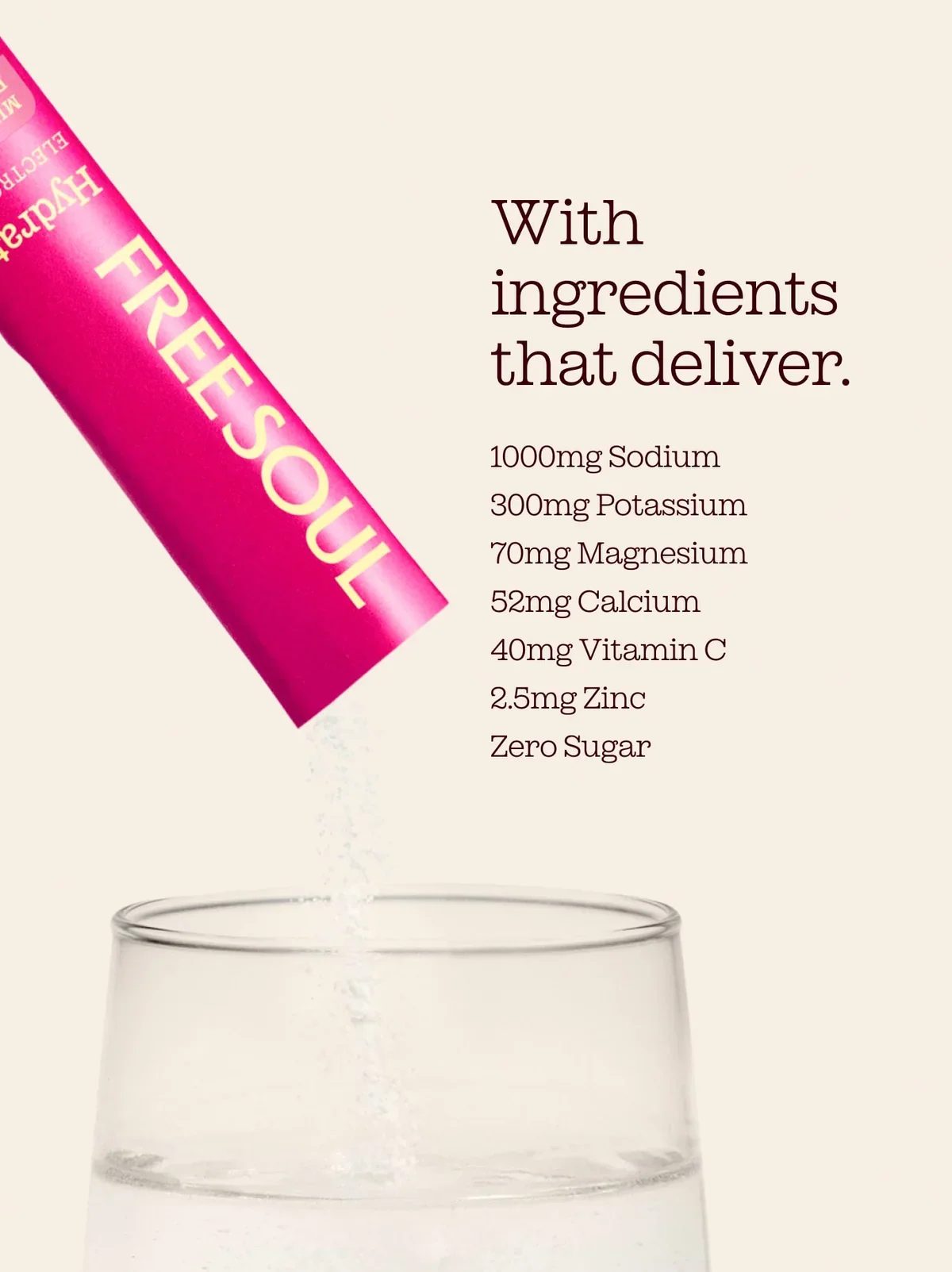
Our overall winners are Free Soul which are the best formulated for when you need a quick hit of minerals. We’ll go through other brands that are best if you need to watch your salt intake, or if you just want a nice daily allrounder to help your wellbeing.
What you need to know before taking them
How do we lose electrolytes? Are electrolytes safe for everyone? How do they differ from isotonic sports drinks? And is it possible to have too much of a good thing? We answer the key questions about safety, suitability and overconsumption.
By the end, you'll have a better understanding of when electrolytes are worth reaching for, what to look for when buying them and which options might best suit your needs.
What are Electrolytes? How many types of electrolytes are there?
Electrolytes are charged minerals that our bodies use in chemical and nerve signals in cell processes all around our body. On a normal daily basis, we absorb them through food and water, and we lose them through our waste products like sweat and urine although this can be influenced by medical conditions.
As with most micronutrients, vitamins and minerals they will all have their own benefits, but will work alongside and in balance with lots of others. There are 7 main types of electrolytes, most of which you would have heard of, and are categorised into whether they hold a positive charge (main ones) like sodium, magnesium, potassium or calcium, or negative charge like chloride, phosphate or bicarbonate.
Electrolyte drinks or gels are drinks with flavouring and added electrolytes. Brands can differ between their blends and ratios of electrolytes, and they may add other vitamins and minerals.
Scroll down for where I’ve linked and discussed everything you need to know about electrolytes, popular brands and their blends, when to use a high quality, high sodium like Freesoul or what to look for if you want a daily wellbeing drink like Humantra.
Why are Electrolytes good for you?
Electrolytes are vital for our bodies. As they have electrical charge (ELECTRO-lytes), they regulate electrical signals in the body - everything from control the gates in and out of our cells, which regulates everything from hydration and fluid balance, muscle contraction, cellular communication and energy production, brain chemistry, nerve signalling and blood pH and more.
Most people will benefit from a pick me up like you would a multivitamin, and the demand will increase with hot weather, stress, sports, sweating, travel, poor diet or hydration and many more. It is rare but possible to have a severe drop in vital minerals which is a medical emergency. This is usually in severe circumstances like starvation or severe diets, kidney failure or more. In this situation there are clinical test like bloods that can be run, but usual fluctuations that make us feel a bit rubbish wont usually be highlighted on blood tests.
How do you feel if you don’t have enough electrolytes?
As electrolytes are in lots of processes, most people report feeling sluggish, brain fog, achy muscles, fatigue, poor sleep, low tolerance or grumpy. You might get a headache, cramps or muscle twitches, or may get dizzy if you stand up quickly.
While a mild electrolyte imbalance might just cause a bit of sluggishness and is very common and most of us will feel this, it is easily remedied within an hour of taking electrolytes, or within a few days of consistent use if you’ve fallen off the wagon a bit. A severe drop in vital minerals is a medical emergency and can include symptoms like palpitations or fainting, but this is very rare. It is usually in severe circumstances like starvation or severe diets, kidney failure or more. In this situation there are clinical test like bloods that can be run, but usual fluctuations that make us feel a bit rubbish wont usually be highlighted on blood tests.
Do electrolytes help muscle pain and cramping at night or after sports (rugby, football, hyrox, running, muay thai)?
Yes. Electrolytes control communication around the nerve and muscle fibres. If you get low, then these signals can misfire and the muscle contraction and relaxation will become dysfunctional, resulting in muscle cramps. In clinic, if someone is presenting with cramps (with no other indication of other conditions) then without fail we are talking about electrolytes. More often than not, they resolve or significantly reduce after a week of electrolyte focus. For this reason, they’re often a great tool for people with chronic pains and muscle fatigue.
You are looking for all the main electrolyte minerals (calcium, potassium, magnesium and sodium all play a role in muscle contraction) in your electrolyte drink if you want them to target muscle cramps. Some drinks miss out calcium, which is the key electrolyte for muscle contraction, and some are low sodium (salt). Ive covered more reasons how we lose electrolytes down below.
Calcium is key for muscle cramps.
Sodium will resupply you after sports or intense activity.
Higher sodium drinks could be excessive for day-to-day use, unless you have low blood pressure or POTS (Postural Orthostatic Tachycardia Syndrome) in which case its very useful.
Who actually needs electrolytes?
Every body relies on electrolytes to function. Most people do not need electrolyte drinks on a daily basis, but would benefit from having them in the cupboard or taking them depending on activities, or help with general wellbeing and things like tiredness, cramps, energy levels. Unless they are specifically formulated for daily use, you should not need them daily.
For decades, electrolyte drinks have been used after sickness and diarrhoea episodes (dioralyte) although in the past few years they have gained traction to not just help when we are sick, but also to help improve our wellbeing.
What are the best Electrolytes (UK, 2026)?
It depends on your needs and preferences. Do you want them for daily support of your wellbeing? Do you want them to replenish lots of salt lost through sweating? Do you want them for something specific like muscle cramps? Is your gut sensitive to artificial sweeteners? How much do you want to spend?
Pre-made isotonic drinks (i.e. Lucozade, Gatorade)or DIY electrolyte Drinks
Okay for a quick fix or to get you out of trouble if you feel groggy after a sweaty day. Not full spectrum and premade drinks come with a lot of artificial additives and sugars.
Formulated Electrolytes
There are 4 here that I’ve shortlisted, but there’s plenty more out there. The effervescent tablets do work out to be significantly cheaper than the sachets, but equally the formulas are overall lower in electrolytes, have more artificial ingredients, and lots of people don’t like the taste as much.
THE BEST FOR A QUICK BOOST:
After sweaty sports (rugby, hyrox, running or football), muscle cramps, after massage, POTS or low blood pressure, for taking as and when, and my overall winner.
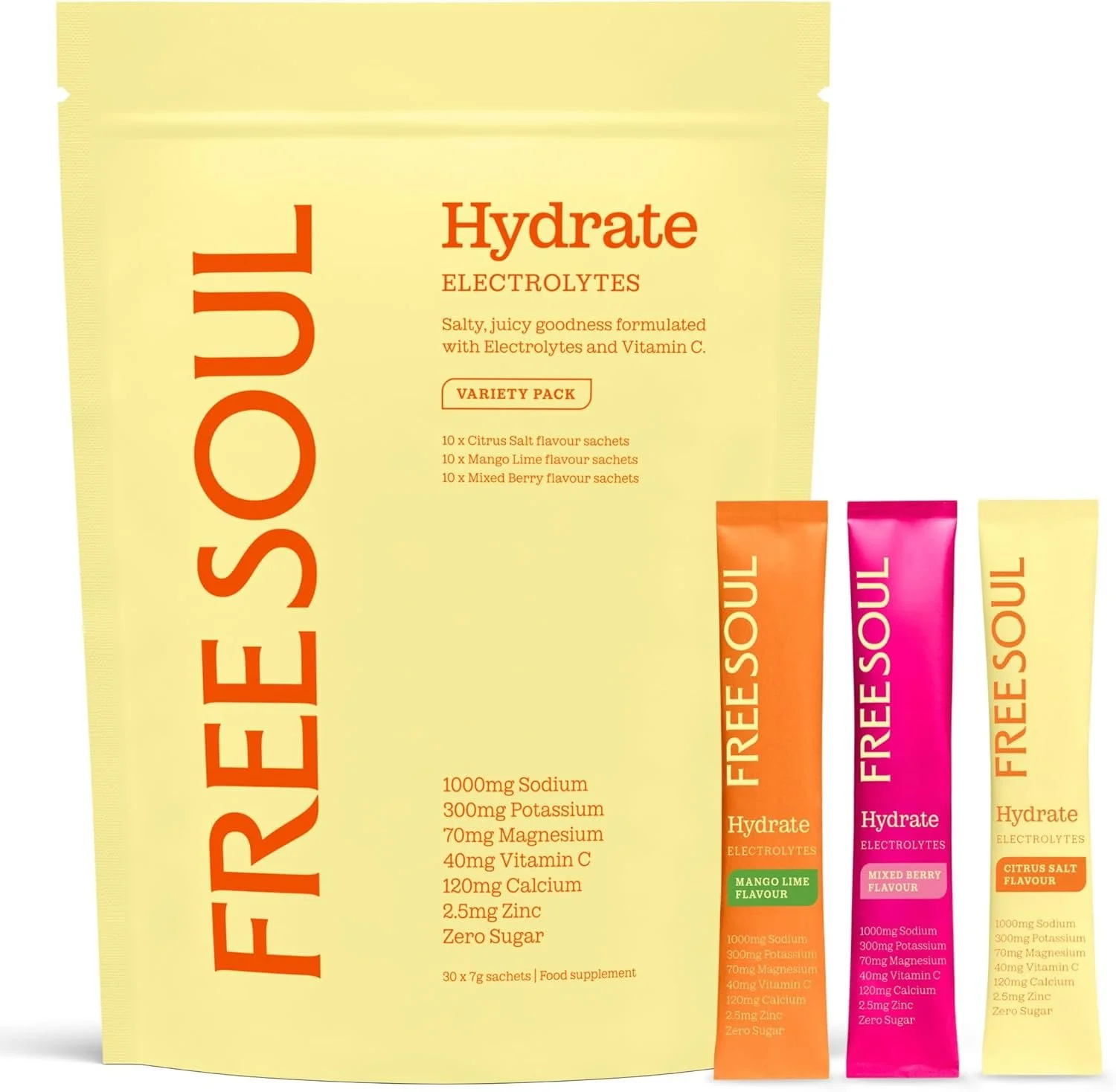
Free Soul: £30 for 30 sachets (£1 a drink and you need less of these than the others)
Formulated with the highest mineral content. One of the higher sodium (salt) electrolyte products out there, so perfect for post sports or one offs – but it's also important to be mindful of how much salt you're consuming. These are my personal favourite both taste wise and to take for a quick boost when I’ve been running round not paying attention to my diet or stress. My favourite is mixed berry!
Non GMO, UK based company, gluten free, soy free and sugar free.
One every now and again, or after being being sweaty.
Sodium: 1000mg
Potassium: 300mg
Chloride: 1814mg
Magnesium:70mg
Calcium: 120mg
Extras: 40mg Vit C, 2.5mg zinc
THE BEST FOR DAILY USEAGE AND OVERALL WELLBEING: Well balanced minerals, clean blend with added vitamins.
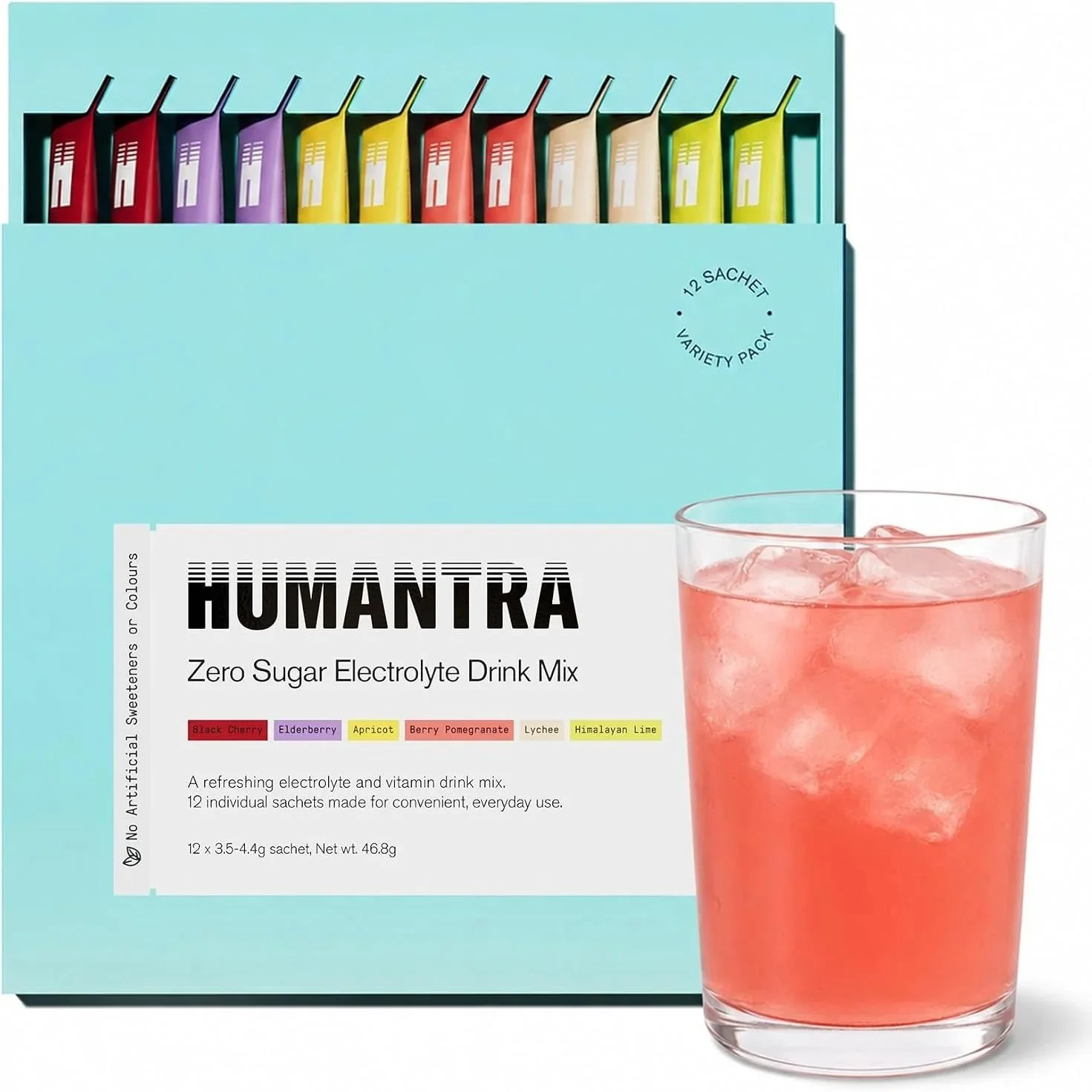
Humantra: £20 for 12 sachets (£1.67 per drink)
These are lower in sodium than free soul if you have to watch your salt intake, and are designed as a tasty, daily drink. Very well balanced across the other electrolytes and the added vitamins are great. All the flavours were delicious but were sweeter/more intense than the free soul. If you want them for sport, then I’d recommend regular use as the individual mineral quantities are lower.
Natural colouring like beetroot powder, non GMO, UK based company, gluten free and sugar free (stevia).
Daily use to maximise wellbeing.
Sodium: 230-680mg
Potassium: 120-180mg
Chloride: 325-560mg
Magnesium: 15mg – 52mg
Calcium: 48mg – 97mg
Extras: 115mg Vit C, B12, zinc, chromium, phosphorus
THE BEST CHEAP AND CONVENIENT ALLROUNDER:
Broad spectrum allrounder that includes multivitamins.
Great for beginners.
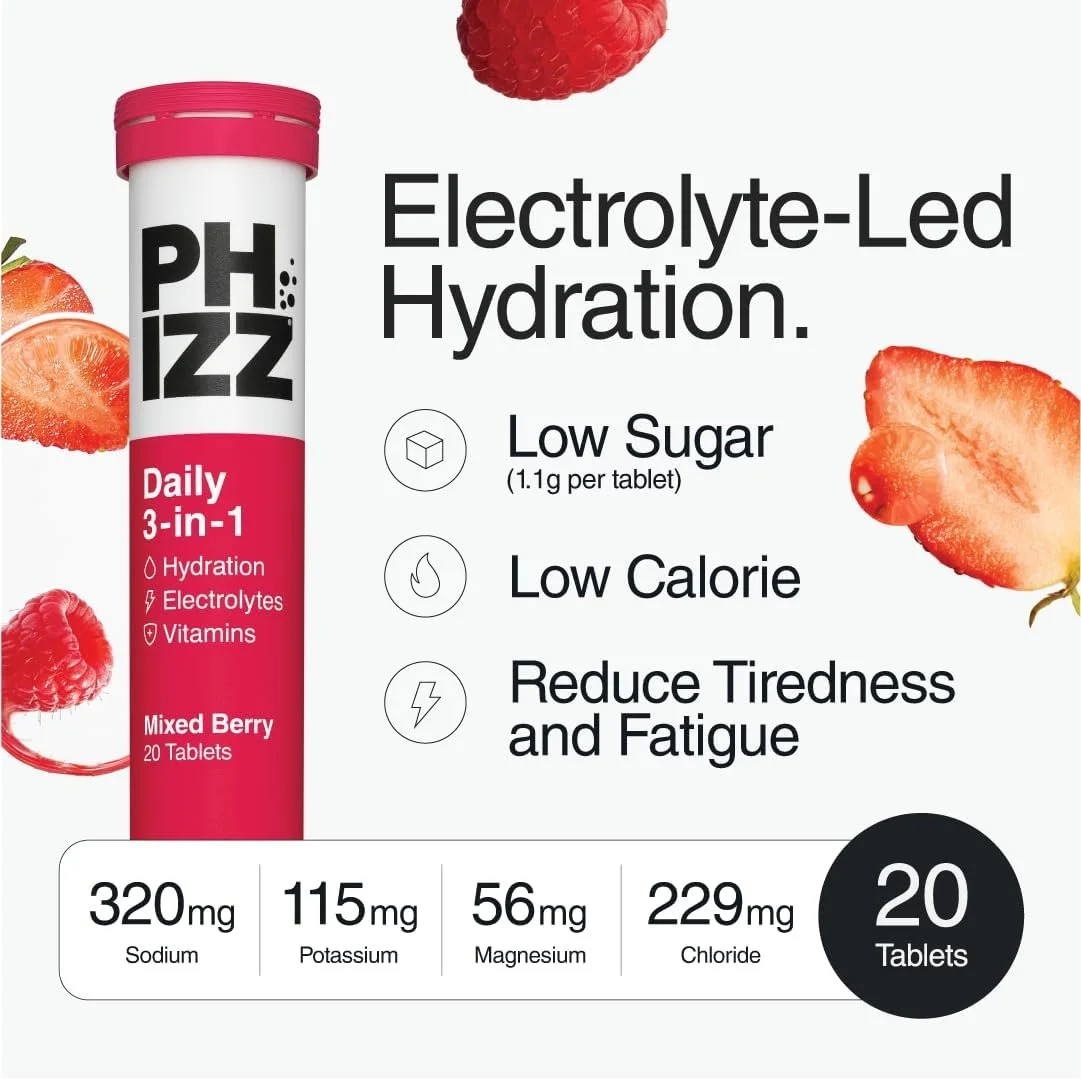
Phizz effervescent tablets: £8 for 20 tablets (40p per drink)
These are a great starting point as they have most electrolytes plus your important multivitamins, so great for the average person. If you’re looking at electrolytes for muscle health then I’d recommend choosing a different one that had calcium.
They do have artificial sweeteners which can of course upset your gut if there’s a sensitivity, but many people are fine. They do also have a cherry flavour that includes caffeine so you get a nice 3 in 1.
One several time a week.
Sodium: 320mg
Potassium: 115mg
Chloride: 229mg
Magnesium: 56mg
Calcium: not included
Extras: copper, manganese, Vit C, Niacin, Vit B6, B1, B2, B12, A, C, Folic acid, Biotin and more
THE BEST CHEAP, SPORTS OR MUSCLE SPECIFIC:
Great for muscle cramps or post sport. Cheap, but worst value when you compare electrolyte content.
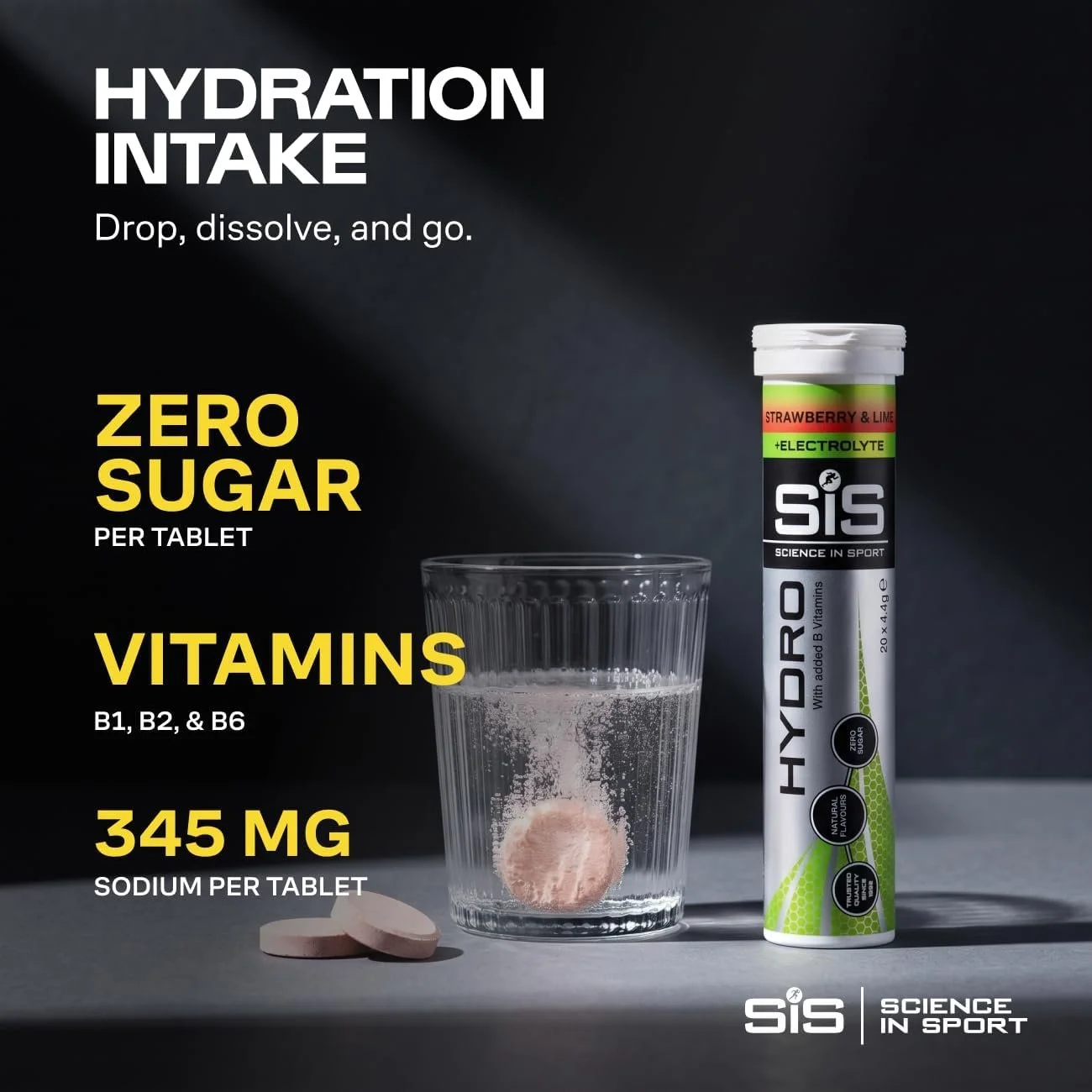
Science in Sport effervescent tablets: 20 tablets for £7.50 (37p - £1.50 per drink)
These are a popular brand formulated for exercise hence the high (ish) calcium. The rest of the levels are low, although they say you can take up to 4 per day. 4 would be a lot of sodium, so be mindful if you need that much, and at that dosage it works out to 5 days for £7.50, so £1.50 each and now the most expensive on this list!
They do have artificial sweeteners which can of course upset your gut if there’s a sensitivity.
Sodium: around 345mg (35% of Free Soul)
Potassium: 65mg (21% of Free Soul)
Chloride: 269mg (15% of Free Soul)
Magnesium: 8.1mg (11% of Free Soul)
Calcium: 102mg (85% of Free Soul)
Extras: B1, B6, B12
Don’t fancy any of these? Here’s what you need to look out for when shopping for electrolytes:
Do they have a full spectrum of all electrolytes?
Have they just put loads of sodium and potassium (the cheaper ones?)
Do you want them for daily support of your wellbeing, or do you want them to replenish lots of salt lost through sweating?
Are there any other vitamins included?
Additives and sweeteners? Some people have gut sensitivities or personal preferences about artificial sweeteners.
Do you need to buy electrolytes? Can you get them from your diet instead?
Ideally your daily electrolytes will come from your diet so you shouldn’t be relying on supplementing. Some brands are formulated to be a big boost of minerals after exercise, and some brands are formulated to be less intensive and broader spectrum for daily use.
Tap water contains trace amounts of all electrolytes. Hard water areas contain more calcium and magnesium than soft water areas, but all are very low sodium and potassium.
Bottled water varies drastically depending on the source - “Natural mineral water” is high in several electrolytes whereas “spring water” is significantly lower.
Coconut water is ‘natures sports drink’ as it contains all electrolytes.
Magnesium can be found in nuts, seeds, legumes, avocado, salmon and more.
Calcium can be found in dairy, green leafy veg, nuts and seeds.
Potassium can be found in banana, baked potato, white beans, sweet potato.
Sodium is readily available as salt. Salt has had a bad rep for a while but small doses is healthy as it helps fluid stabilisation. unless you have an underlying condition or predisposition to blood pressure concerns.
So yes, you can get everything you need from food. However sometimes, despite our best efforts, we don’t all follow the perfect nutrition or we do something sweaty or stressy that leads to more loss of electrolytes.
How do we lose electrolytes?
Ideally your daily electrolytes will come from your diet so you shouldn’t be relying on supplementing. Some brands are formulated to be a big boost of minerals after exercise, and some brands are formulated to be less intensive and broader spectrum for daily use. Its a good idea to top yourself up with electrolytes if you do anything from this list:
Sweat: from sports (rugby, football, hyrox, running etc) manual labour, hot weather, fevers. Sweat contains high salt content, so we need to replenish the sodium.
Stress: triggers hormone releases that change how your kidneys process minerals.
Urination: kidneys continuously filter our blood to balance fluid levels, clear metabolic waste, and regulate minerals like sodium, potassium, calcium, and magnesium.
Temporary illness: sickness and diarrhoea will rapidly reduce your mineral content as it’s lost through fluid.
Alcohol: diuretic plus alcohol severely accelerates the rate at which your body filters out magnesium through the kidneys. As your fluid levels drop, your body's internal cellular pumps become destabilized. A drop in potassium levels leads directly to the physical muscle weakness, fatigue, and rapid or fluttering heart rate often experienced the morning after drinking.
Circadian rhythm: our body’s internal 24-hour biological clock (the circadian rhythm) directly dictates how your kidneys filter, retain, and excrete electrolytes throughout the day and night
Aeroplanes: cabin humidity is often below 20%. This low moisture forces your body to lose up to 0.25 litres of water per hour purely through breathing and skin evaporation, quietly pulling sodium, potassium, and magnesium out along with it
Diets: specifically low carb, strict keto or low calorie diets that drop insulin or general nutrition and therefore affect nutrition or kidney processing.
Medical: malabsorption like Crohn’s or ulcerative colitis or kidney issues. Speak to your GP regarding electrolyte supplementation.
Do electrolytes hydrate you better than water?
Electrolytes, particularly sodium and glucose, support water absorption in the small intestine through sodium-glucose co-transport (SGLT1), helping move water into the bloodstream and maintain fluid balance. While water is sufficient for everyday hydration, electrolyte drinks can improve fluid absorption and retention when significant amounts of water and minerals have been lost through sweating, exercise or illness.
Are electrolytes different to isotonic (sports) drinks?
Isotonic drinks are formulated beverages that contain water, electrolytes PLUS carbohydrates (sugars/glucose). The carbs in it supply energy so are designed for a mid-exercise boost, plus glucose gives some extra help with hydration. Glucose and sodium are absorbed together across the intestinal wall, with water following by osmosis into the bloodstream, helping maintain fluid balance and rehydration. This is why glucose is included in oral rehydration solutions and many isotonic drinks.
Can you take too many?
The kidneys normally regulate electrolyte levels by filtering excess minerals from the blood, so it’s hard to take too many as the kidneys will just sort it out without you noticing. Severe over-supplementation or impaired kidney function can overwhelm this process. Excess fluid retention or palpitations are signs that you’ve taken too many, but as long as you follow the guidelines there shouldn’t be an issue.
Is it safe for everyone to take electrolytes?
Yes unless you have underlying heart or kidney issues. While generally safe for healthy adults when used appropriately, people with kidney disease, heart conditions or high blood pressure should be cautious, as excess sodium and potassium can affect fluid balance, blood pressure and heart function. Certain medications, including diuretics and blood pressure medicines, can also affect electrolyte levels, so it's best to seek medical advice before supplementing regularly.
Who benefits from taking electrolytes?
Both people that are outdoors a lot, or have pain or stiffness aggravated in Winter . If you have an outdoor hobby AND a condition that’s aggravated in the cold these gilet can be complete gamechanger.
Outdoor sports - rugby, football, running
Electrolytes are essential for sweaty sports. Rugby players, footballers and runners are just a few of the outdoor sweaty sport players who need support replacing vital minerals s lost through sweat during intense physical activity. Drinking alcohol at socials, especially after a game, can contribute to further electrolyte loss. If you get cramps after a game, especially after drinking alcohol then electrolytes are a great idea.
Outdoor or manual jobs - builders, roofers, equestrians, farmers, labourers
Whether working in construction, agriculture, equestrian, farming or landscaping, often means eating on the go and not drinking enough and then losing what little electrolytes you’ve consumed through sweat. . If you’re eating ready meals you may not need extra salt (so choose low sodium) spending long hours outdoors can increase fluid loss and the risk of dehydration, particularly in hot or cold weather. Especially since these roles often come with poor nutrition and hydration, and often increased rates of muscle cramps.
Sports massage and lymphatic massage
Massage can influence circulation and fluid movement, while lymphatic drainage massage may leave you needing to urinate more frequently as your body processes and moves fluid. We always recommend drinking plenty of water after a massage, but paying particular attention to hydration after lymphatic massage is especially important. Electrolytes may also help replace minerals lost through sweating or increased fluid loss, supporting your body's normal fluid balance.
Hot weather
Hot weather and prolonged sun exposure can cause increased sweating, leading to the loss of essential electrolytes such as sodium and potassium. If these minerals and fluids aren't adequately replenished, you may experience symptoms such as headaches, dizziness, muscle cramps, fatigue and excessive thirst. Electrolyte drinks can help replace minerals lost through sweat and support normal fluid balance, particularly during exercise or extended periods in the heat. As sodium is involved in fluid retention, lots of people find they don’t get as ‘puffy’ during summer.
Indoor sports - boxing, muay thai, swimming, hyrox, crossfit
Warm, poorly ventilated environments can cause you to sweat heavily. As you sweat, you lose essential minerals, particularly sodium, which helps regulate fluid balance and supports normal muscle and nerve function. Replenishing electrolytes can help replace these losses, especially during longer or more intense sessions. They may also be beneficial if you notice excessive sweating, muscle cramps, headaches or fatigue after exercise.
POTS/low blood pressure
Increasing salt (sodium chloride) and fluid intake is considered a first-line, non-pharmacological management strategy for Postural Orthostatic Tachycardia Syndrome (POTS) and low blood pressure. The aim is to increase circulating blood volume, improve venous return and support blood pressure. POTSUK recommend 6-10g of additional salt per day (here) if you have POTS and this study found improvements within 6 days of high sodium, although it is best to speak to your consultant.